


Vegetable Powders in Your Pantry: A Practical Guide to Buying, Using, and Storing Them
Dehydrated vegetable powders occupy an interesting space in the modern kitchen — they sit somewhere between the convenience of processed food and the nutritional value of whole vegetables. At their best, they are a genuine pantry asset: concentrated flavour and nutrition in a shelf-stable, easy-to-measure form that can be incorporated into cooking faster than you can chop and sauté fresh vegetables. At their worst, they are faded, flavourless shadows of the vegetables they came from, stored in conditions that have accelerated their degradation. Understanding the difference — and knowing how to choose, store, and use vegetable powders effectively — is the key to making them a genuinely useful part of your cooking.
What Are Dehydrated Vegetable Powders?
Vegetable powders are made by dehydrating fresh vegetables (or in some cases, fresh vegetable juice) until the moisture content drops to below five percent, then milling the desiccated vegetable material to a fine powder. The dehydration can be achieved through several methods — sun drying (traditional and still common in some regions), hot air drying (the most common commercial method), and freeze-drying (the most expensive method, but the most effective at preserving colour, flavour, and nutrition).
The result is a highly concentrated form of the original vegetable: by weight, it takes approximately ten to twenty kilograms of fresh vegetables to produce one kilogram of vegetable powder, meaning that a small spoonful of powder contains the concentrated flavour and nutrition of a much larger quantity of fresh vegetable.
How to Choose Quality Vegetable Powders
The quality of vegetable powders varies enormously between suppliers, and there are several reliable indicators to look for when buying.
Colour: High-quality vegetable powders should be vivid and true to the colour of the fresh vegetable. Moringa powder should be a vibrant green. Beetroot powder should be a deep magenta-red. Red onion powder should have a warm reddish hue. Pale, faded, or off-colour powders indicate either poor-quality source vegetables, excessive heat during drying (which degrades colour-producing pigments), or old product that has been exposed to light and air.
Ingredient list: The ingredient list of a vegetable powder should contain one item — the vegetable in question. Any additional ingredients — anti-caking agents, fillers, maltodextrin, or artificial colours — indicate a lower-quality, adulterated product. FlavourDrum's vegetable, leaf, and botanical powders contain nothing except the named ingredient.
The Most Versatile Vegetable Powders to Start With
If you are building a vegetable powder collection from scratch, start with these five for maximum versatility:
Red onion powder: The most universally versatile of all vegetable powders. It works in virtually any savoury application — dressings, marinades, dry rubs, soups, breads, and dips. It is the one vegetable powder that most closely mimics the function of a fresh cooking ingredient.
Tomato powder: Made from dehydrated tomatoes, tomato powder delivers intense concentrated tomato flavour to soups, sauces, and stews with a fraction of the effort of cooking down fresh tomatoes.
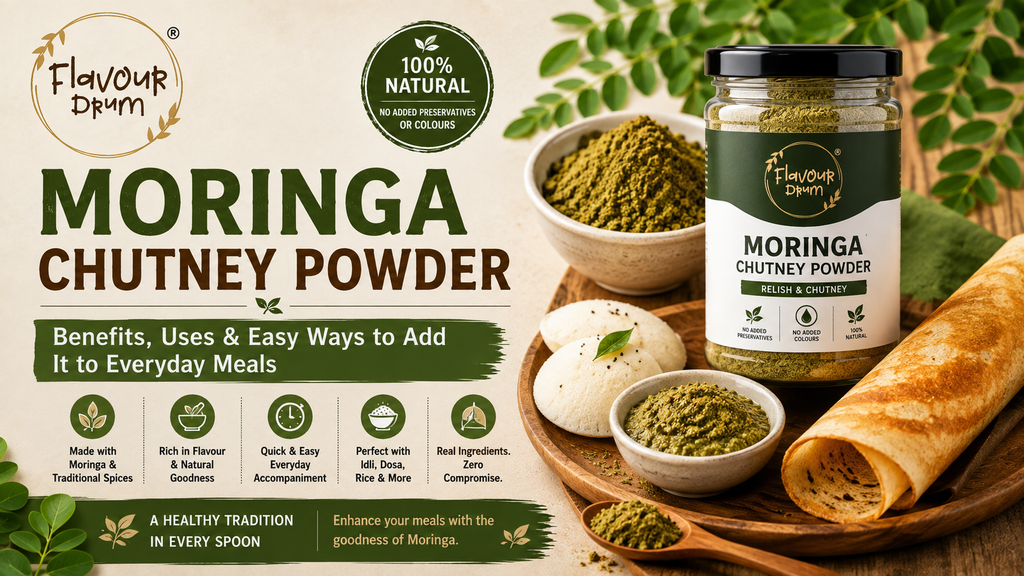
Moringa powder: The most nutrient-dense option, with a distinctive green colour and earthy flavour that works in smoothies, dal, soups, and chutney preparations.
Spinach powder: More neutral in flavour than moringa, making it more versatile as a natural green food colourant and nutritional addition to pasta, bread, and dips.
Ginger powder: Not strictly a vegetable but a rhizome — however, dried ginger powder is a different beast from fresh ginger, with a more concentrated, more peppery heat that has specific applications in baking and dry spice blends.
Cooking Applications: How to Incorporate Vegetable Powders
The key principle when using vegetable powders in cooking is that they need liquid (and usually heat) to fully rehydrate and release their flavour. Adding vegetable powder to a dry preparation simply distributes a dry powder that will remain partially concentrated in spots. Adding it to a soup, sauce, marinade, or dough where it can absorb moisture produces much more evenly distributed, fully expressed flavour.
Practical applications: stir into soups and broths in the last five minutes of cooking; whisk into dressings and marinades before adding protein; incorporate into bread, pasta, or flatbread dough; blend into smoothies with sufficient liquid; mix into dips and spreads with yogurt or cream cheese as the liquid component. The one exception is using vegetable powders as dry rubs for meat and vegetables before roasting — in this application, the moisture from the protein or vegetable surface provides enough liquid for the powder to rehydrate and adhere effectively.
How to Store Vegetable Powders Correctly
Vegetable powders are sensitive to the same environmental factors that affect other dried ingredients — light, heat, moisture, and air. However, their high surface area (compared to whole dried vegetables) makes them more vulnerable to degradation. A few specific considerations for vegetable powder storage:
Dark containers are more important for vegetable powders than for many other pantry ingredients because chlorophyll-containing powders (moringa, spinach) and carotenoid-containing powders (beetroot, tomato, annatto) degrade rapidly when exposed to light. Use amber glass jars or opaque containers for these powders. Keep them in the coolest part of your kitchen. Refrigeration is worth considering for powders you use infrequently or in a warm kitchen climate — it significantly extends shelf life and maintains colour.
Making the Most of Your Vegetable Powder Investment
Given that vegetable powders represent good value for money only when used regularly and stored correctly, a few habits make the investment worthwhile. Buy quantities that you will use within six to nine months — a large bag of moringa powder that sits unused for two years is poor economy regardless of the upfront cost per gram. Incorporate vegetable powders into your regular cooking rather than treating them as special occasion ingredients — the more frequently you use them, the more familiar you become with their flavour profile and the more naturally you incorporate them.
FlavourDrum's vegetable, leaf, and botanical powder collection covers the full range of commonly used powders — from moringa and spinach to red onion and other botanicals — all packaged in resealable, moisture-resistant packaging designed to maintain quality between uses.
Related post
02
Sep
02
Sep
02
Sep


