

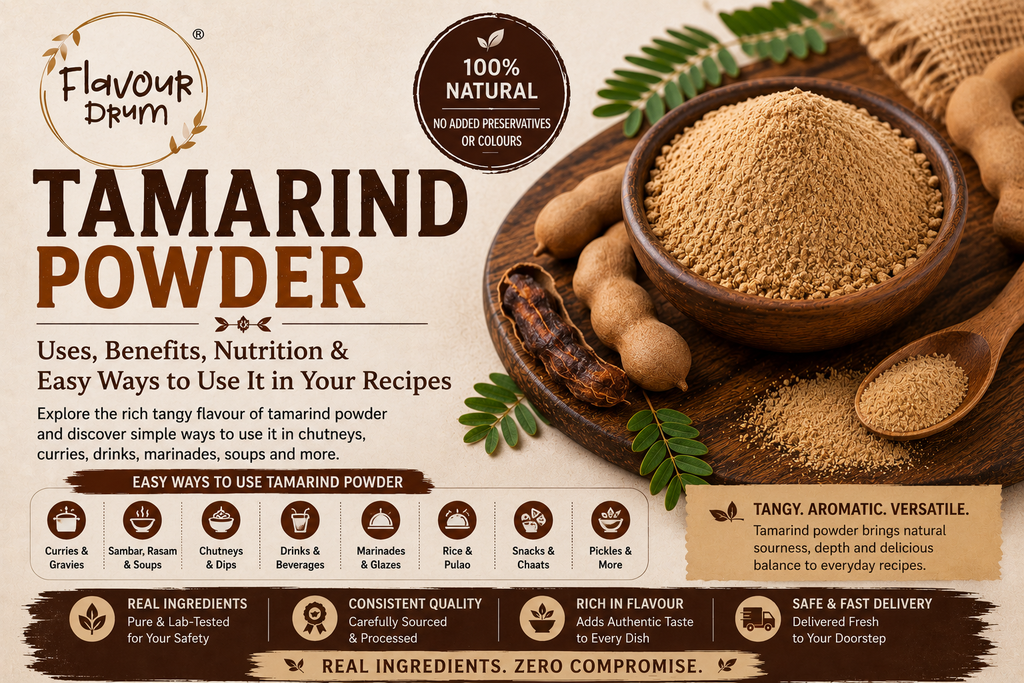
Tamarind Powder: Uses, Benefits, Nutrition & Easy Ways to Use It in Your Recipes
Tamarind is one of the most recognizable ingredients in Indian cooking, loved for its distinctive tangy, sour and slightly sweet flavour. It is used in everything from sambhar and rasam to chutneys, curries, drinks, marinades and snacks.
Fresh tamarind, however, can require preparation before it is ready to use. Tamarind powder offers a convenient dry alternative that can be measured and added directly to recipes.
Whether you're preparing a traditional Indian dish or experimenting with a new recipe, tamarind powder can be a useful pantry ingredient for adding acidity and depth.
What Is Tamarind Powder?
Tamarind powder is a dried and powdered form of tamarind.
Tamarind comes from the fruit of the tamarind tree, which produces brown pods containing a tangy edible pulp. The pulp is traditionally used as a souring ingredient in many cuisines.
Converting tamarind into powder creates a convenient format that can be stored, measured and incorporated into recipes without preparing fresh tamarind pulp.
What Does Tamarind Powder Taste Like?
Tamarind has a distinctive flavour profile that combines:
- Tanginess
- Sourness
- Mild sweetness
- Fruity notes
- A deep, slightly earthy character
This combination makes it different from simple acidic ingredients such as lemon juice.
Tamarind can provide both acidity and depth, which is why it is commonly used in sauces, curries, chutneys and traditional Indian preparations.
8 Easy Ways to Use Tamarind Powder
1. Add It to Sambhar and Rasam
Tamarind is an important flavour component in many South Indian dishes.
Tamarind powder can be added to sambhar, rasam, and similar preparations to provide their characteristic tangy flavour.
Start with a small amount and adjust according to the recipe.
2. Make Tangy Chutneys
Tamarind powder works beautifully in chutneys.
Combine it with ingredients such as chilli, jaggery, cumin, dates, mint, or coriander to create sweet-and-sour or spicy chutneys.
It can be especially useful in homemade chaat-style chutneys.
3. Use It in Curries and Gravies
A little tamarind powder can add acidity and balance to curries and gravies.
It works particularly well with vegetable-based dishes, lentils and recipes that benefit from a tangy flavour profile.
4. Add It to Drinks
Tamarind can also be used in refreshing beverages.
Mix tamarind powder with water, spices, salt, or sweeteners to create a tangy drink.
You can experiment with ingredients such as roasted cumin, mint, or jaggery to develop different flavour combinations.
5. Season Chaat and Snacks
Tamarind is a classic ingredient in many chaat preparations.
Use tamarind powder to add tanginess to:
- Aloo chaat
- Samosas
- Pakoras
- Bhel
- Roasted snacks
- Homemade snack mixes
It can be combined with chilli powder, cumin, black salt, and other seasonings.
6. Use It in Marinades
Tamarind powder can be added to marinades for vegetables, paneer, tofu, and other preparations.
Its tangy flavour can complement spices, herbs, oil, yogurt, and other marinade ingredients.
7. Add It to Rice Dishes
Tamarind can be used to create flavourful rice preparations.
Tamarind powder can be combined with spices, curry leaves, peanuts, lentils, and other ingredients to create tangy rice dishes inspired by traditional tamarind-based recipes.
8. Use It in Pickles and Sauces
Tamarind's distinctive acidity makes it useful in homemade sauces, condiments and pickles.
It can add complexity to recipes where you want a balance between sour, sweet, salty and spicy flavours.
Tamarind Powder vs Fresh Tamarind
Both forms can provide tamarind's characteristic tangy flavour, but they differ in convenience.
| Tamarind Powder | Fresh Tamarind |
|---|---|
| Ready to measure and use | Requires preparation |
| Dry ingredient | Contains moisture |
| Convenient for dry spice blends | Useful for making fresh pulp |
| Easy to incorporate into recipes | Can require soaking and straining |
| Convenient pantry ingredient | Traditional ingredient for many recipes |
Fresh tamarind is excellent when you want to prepare tamarind pulp, while tamarind powder is particularly convenient when you want a quick, easy-to-measure souring ingredient.
Tamarind Powder vs Lemon Juice
Tamarind and lemon can both add acidity, but they create very different flavour profiles.
Lemon juice provides a bright, fresh citrus flavour, while tamarind offers a deeper fruity, sour and slightly sweet character.
Tamarind powder is particularly useful when you want acidity combined with the distinctive flavour of tamarind.
Is Tamarind Powder Nutritious?
Tamarind naturally contains nutrients and various plant compounds. However, the nutritional composition of tamarind powder can vary depending on the raw material, processing method, serving size, and storage.
Since tamarind powder is generally used as a flavouring or souring ingredient rather than consumed in large quantities, it is best considered part of an overall varied diet.
Its main culinary role is to provide distinctive tanginess and flavour.
How Much Tamarind Powder Should You Use?
The amount depends on the recipe and the desired level of sourness.
Tamarind has a strong flavour, so start with a small quantity and adjust gradually.
Consider:
- The quantity of food
- Other acidic ingredients
- The sweetness of the recipe
- Your preferred level of tanginess
- The concentration of the particular powder
Adding gradually allows you to achieve a balanced flavour without making the dish excessively sour.
How to Store Tamarind Powder
Like other dehydrated ingredients, tamarind powder should be protected from moisture.
For best results:
- Store it in an airtight container.
- Keep it in a cool, dry place.
- Avoid direct sunlight.
- Use a clean, dry spoon.
- Prevent moisture from entering the container.
- Follow the storage instructions provided on the packaging.
Proper storage helps maintain the powder's flavour and texture.
Why Keep Tamarind Powder in Your Pantry?
Tamarind is an incredibly versatile flavouring ingredient.
With tamarind powder readily available, you can add its distinctive sour and fruity character without soaking, extracting, and straining fresh tamarind.
From sambhar and rasam to chutneys, curries, drinks, rice dishes, snacks and sauces, there are plenty of ways to use it.
It's particularly useful for cooks who enjoy Indian flavours and want convenient pantry ingredients.
Try Flavour Drum Tamarind Powder
Flavour Drum Tamarind Powder is part of the brand's range of dehydrated powders and cooking ingredients.
It can be used to add tanginess to curries, sambhar, rasam, chutneys, drinks, marinades, rice dishes, snacks, sauces and other preparations.
Its powdered format makes it easy to measure and incorporate into everyday recipes.
Real Ingredients. Zero Compromise.
Final Thoughts
Tamarind powder brings the distinctive flavour of tamarind into a convenient dry format.
Its combination of tangy, sour and mildly sweet notes makes it useful across a wide variety of dishes.
Whether you're making sambhar, rasam, chutney, chaat, curry, a refreshing drink, or a homemade sauce, tamarind powder can help add the acidity and depth that bring the recipe together.
Keep it in your pantry and experiment with small amounts to discover your favourite ways to use this versatile ingredient.
Related post
02
Sep
02
Sep
02
Sep


