


Natural Food Colouring at Home: How to Colour Food Without Artificial Dyes
The visual appeal of food matters enormously — we eat first with our eyes, and colour is one of the primary ways we judge the freshness, quality, and appeal of what is on our plate. The food industry has long relied on synthetic dyes to produce vivid, consistent colours in everything from sweets and cereals to processed cheeses and soft drinks. But natural food colouring is not just a trend — it is a return to the traditional methods that were used before synthetic chemistry changed the food supply, and the results are often more beautiful, more complex, and more interesting than their artificial counterparts. This guide covers the most practical and widely available natural food colouring options for home use.
Annatto: The Natural Orange-Yellow Colourant
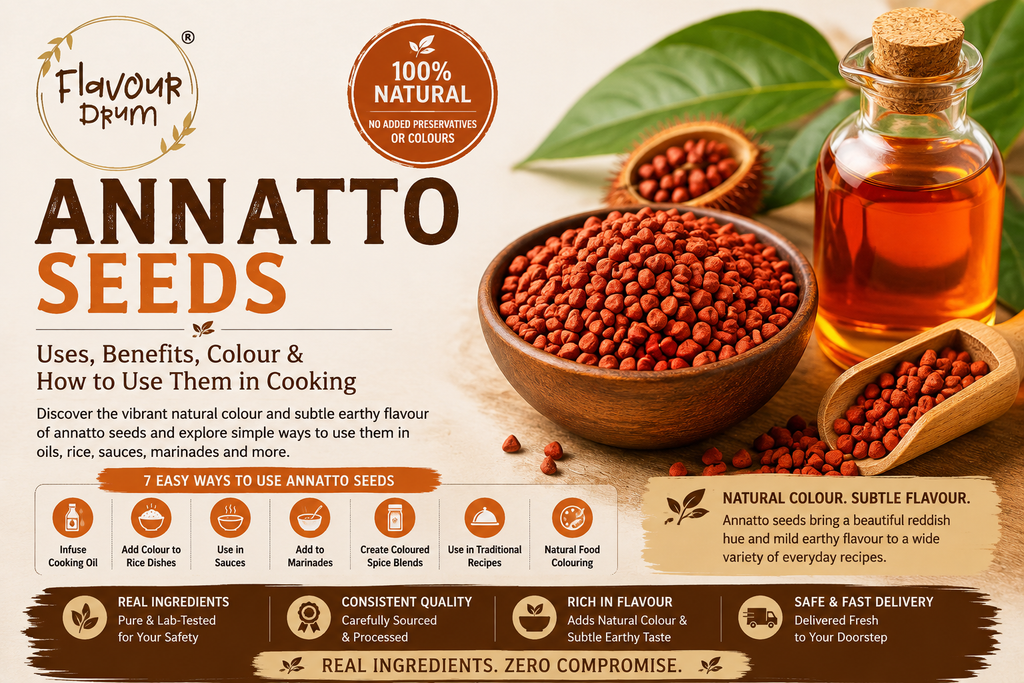
Annatto seeds from the Bixa orellana tree are the most widely used natural food colourant in the world — used commercially in cheese, butter, cereals, and snack foods, and traditionally in Latin American and Filipino cooking. The carotenoid pigments (bixin and norbixin) in annatto produce colours ranging from pale yellow to deep orange-red depending on concentration and method of extraction.
At home, the simplest method is infusing annatto seeds in warm oil or water. Simmer seeds in oil for five minutes to extract an orange oil for cooking. For water-based colouring (for bread, rice, or pastry), simmer seeds in water for fifteen minutes, strain, and use the coloured water as part of the liquid component in your recipe. The colour is stable, attractive, and imparts a very mild earthy flavour that is undetectable in most applications.
Moringa Powder: A Vibrant, Natural Green
Moringa powder's intense green colour comes from its high chlorophyll content, making it an excellent natural green food colourant. A teaspoon of moringa powder produces a vivid green colour in smoothies, pasta dough, bread, icings, and dips. The key is to use it in applications where its mild earthy flavour can either be masked by other strong flavours or where it is a welcome addition.
For naturally green pasta: substitute one to two tablespoons of flour with moringa powder in fresh pasta dough. For green icing: add a small amount of moringa powder to royal icing or fondant and knead until the colour is evenly distributed. For naturally green smoothies and drinks: moringa powder is one of the most effective natural green colourants available, producing beautiful results when combined with fruit-based smoothies.
Turmeric: Yellow Gold
Turmeric is the easiest and most universally available natural yellow food colourant. Its active pigment, curcumin, produces colours ranging from pale yellow (in small quantities) to vivid golden-orange (in larger amounts). It is heat-stable, fat-soluble, and works in both water-based and oil-based preparations.
For yellow rice: add half a teaspoon of turmeric to the cooking water. For golden bread or pastry: incorporate a teaspoon into the dough. For yellow sauces and soups: add turmeric to the oil at the beginning of cooking. One important note: turmeric stains everything — cutting boards, cloth, light-coloured silicone utensils, and even countertops. Use dedicated utensils and work on a surface that is easy to clean.
Beetroot Powder: From Pink to Deep Magenta
Beetroot powder produces one of the most striking natural colours available — a range from pale pink (in small amounts) to deep magenta-red (in larger quantities). It is water-soluble and works beautifully in doughs, batters, icings, dips, and dressings. Beetroot-coloured cakes, breads, and pasta are visually dramatic and genuinely popular in artisan bakeries for their striking appearance.
For pink pancakes: add one tablespoon of beetroot powder to your usual batter. For red velvet cake without artificial colouring: use beetroot powder as the colourant in place of red food dye — the flavour is mild enough to be masked by cocoa and vanilla. For pink pasta: add a tablespoon of beetroot powder to fresh pasta dough. The one limitation of beetroot as a food colourant is that it fades somewhat with prolonged heat exposure and in highly acidic or alkaline environments.
Spinach Powder and Other Green Vegetables
Spinach powder, pea powder, and other green vegetable powders produce a range of green colours suitable for pasta, bread, and savoury applications. Unlike moringa, spinach powder has a very mild flavour that is largely undetectable in most recipes, making it a more versatile choice for sweet applications like green frosting or pastry where moringa's earthiness might be noticeable.
For naturally green pasta dough: use spinach powder in the same way as you would moringa — substituting a small portion of the flour with the powder. For savoury crackers and breadsticks: incorporate spinach powder into the dough for a green colour and a mild vegetable flavour. For green-coloured dips and spreads: mix spinach powder into hummus, cream cheese, or yogurt dip.
Practical Tips for Working with Natural Food Colourants
A few key principles that make working with natural food colourants more predictable and successful.
Concentration: Natural food colourants are generally less vivid than synthetic dyes and require more product to achieve comparable intensity. Start with the recommended amount and increase gradually.
Heat stability: Some natural colours fade or change with heat. Turmeric and annatto are heat-stable and work well in baked applications. Beetroot and berry-based colours are more heat-sensitive and are better used in raw or cold applications or added after cooking.
pH sensitivity: Many natural pigments change colour with pH. Beetroot turns brown in acidic environments and brightens in alkaline ones. Butterfly pea flower (a blue-purple natural colourant) turns pink-red when an acidic ingredient like lemon is added.
Consistency: Natural colourants vary in their colour intensity from batch to batch due to natural variation in the source ingredient. Expect some variation and adjust quantities accordingly.
Related post
02
Sep
02
Sep
02
Sep


